
ConstructionTaryn ParisThu 05 Mar 26
Softer Tender Prices Fail to Improve Project Feasibility

Softer tender price forecasts are failing to translate into improved project feasibility, despite signs of global price moderation.
This is the key finding from the latest global annual report by Rider Levett Bucknall (RLB), which paints a picture of an industry grappling with fragile economic growth, labour constraints and increasingly complex global interdependencies.
While 50 per cent of regions surveyed reported downward revisions in their 2026 tender price inflation forecasts, and 40 per cent saw similar easing in 2027, viability remained the sector’s defining challenge, according to RLB.
“If there is one key takeout from RLB’s Global Annual Report this year, it is that our industry is being asked to deliver more, with less and with less margin of error,” RLB head of industry and insight Paul Beeston said.
Easing inflation, feasibility challenges persist
The moderation in tender price growth will offer some relief to developers recalibrating feasibility models after several years of cost spikes.
But easing inflation does not equate to a return to pre-pandemic economics, the report warned.
Globally, pricing remains exposed to material costs, labour shortages, regional tariffs, and international factors such as geopolitical shifts and supply chain disruptions.
“Even for project teams operating in a single market, global connectivity means that pricing, risk and procurement remain exposed to international forces,” Beeston said.
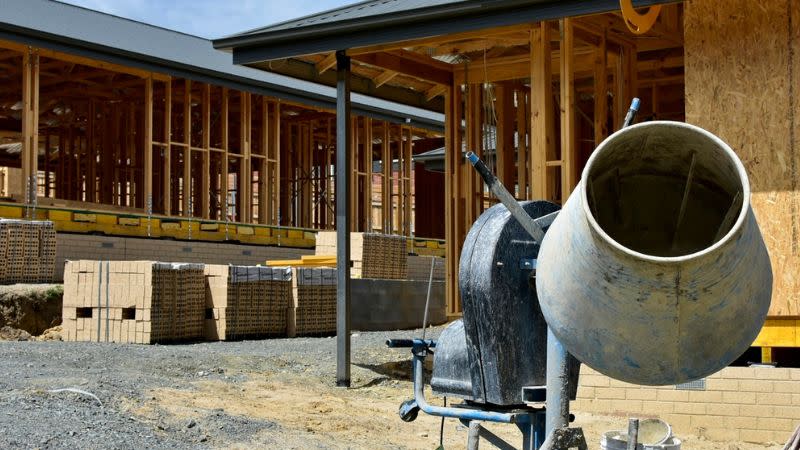
For Australian developers, that means feasibility remains finely balanced. Softer forward estimates may slow the rate of escalation, but RLB has warned they are unlikely to materially reset project economics in the short-term, particularly in overheated metropolitan and regional markets.
Australia in a global cost context
RLB’s Construction Cost Relativity Index underscores Australia’s relatively high cost base globally.
In Oceania, Townsville currently ranks as the most expensive city to build in Australia and New Zealand, with an index score of 111. Brisbane sits at 103, followed by the Gold Coast at 102 and Sydney at 100. Melbourne (91), Adelaide (89), and Canberra (87) are tracking lower, while Darwin (85) and Christchurch (81) are the least expensive in the region.
Internationally, New York tops the index at 155, followed closely by San Francisco (154) and Chicago (139). London remains one of the UK’s most expensive markets at 113, compared to the Midlands (89) and the North West (94).

At the other end of the spectrum, Jakarta (44) and Guangzhou (45) are among the cheapest places to build globally.
For Australia, the relativity index reinforces the reality that the nation is operating from a structurally high base, in stark contrast to Asian markets that compete for capital and supply chain resources.
Productivity the missing lever
If costs are not falling meaningfully, productivity is emerging as the primary lever to restore feasibility.
Against a backdrop of static and fragile global growth, RLB identified productivity improvement as pivotal to unlocking viable delivery.
The report cautioned against over-reliance on technology alone.
Digital tools, data and artificial intelligence are acknowledged as the largest transformational forces in the built environment, with 31 per cent of respondents predicting productivity gains from technology. But tech is not a silver bullet.

Collaborative procurement models such as alliancing were identified as contributing 20 per cent of potential productivity improvements, while modern methods of construction (MMC) and design for manufacture and assembly (DfMA) are expected to account for 29 per cent.
“Productivity is key to viability, and yet it isn’t just technology that will drive this productivity. Better processes and investment in skills are also important,” Beeston said.
For Australia—where labour constraints, skills shortages and fragmented procurement have compounded cost pressures—the findings suggest structural reform may be as important as innovation.
Australian market overheated
RLB Oceania director of research and development Oliver Nichols said that while cost escalation had moderated globally, Oceania was still on the boil.
“In Australia, pricing remains structurally elevated as the construction market remains overheated, with labour constraints, productivity challenges and supply-chain risk continuing to impact cost and delivery certainty,” Nichols said.
Nichols said feasibility pressures would persist due to constrained labour supply, risk pricing and reduced tolerance for contingency blowouts, while a significant pipeline of big infrastructure and data centres continues to absorb capacity.





