

Glebe Social Housing Project Delivers ‘Density Without Compromise’

A social housing renewal at Glebe has tripled its housing yield, delivering 75 homes in place of 19 as the NSW Government pushes to prove higher-density development can work within established inner-city communities.
The project comprises two towers of eight storeys and a row of three-storey terrace houses that front MJ Doherty Reserve, 7km west of the Sydney CBD.
A key element of replacing the existing housing was prioritising a social housing increase as part of the renewal program—from 19 apartments to 75, a 300 per cent rise.
The JPW-designed project for Homes NSW and the King’s Trust was built by Kane Constructions and comprises a cross-laminate timber structure with a red-brick cladding veneer.
According to JPW director Graeme Dix, the project was designed to respond to the existing built form within Glebe, a city-adjacent suburb known for its large-scale woolstores, warehouses and dense terrace housing.
“Cowper Street Housing is a showcase of traditional architectural approaches where the values of making and crafting our built environment are measured alongside cost and efficiency,” Dix said.
“It was several years in delivery and the project anticipated the growing need for density done well in the NSW housing strategy.
“The creation of this substantial uplift in social housing on a site previously occupied by social housing—with such a strong focus on amenity, liveability and sustainability demonstrates that density, even in some of the most densely populated suburbs of Sydney, can be done well.”
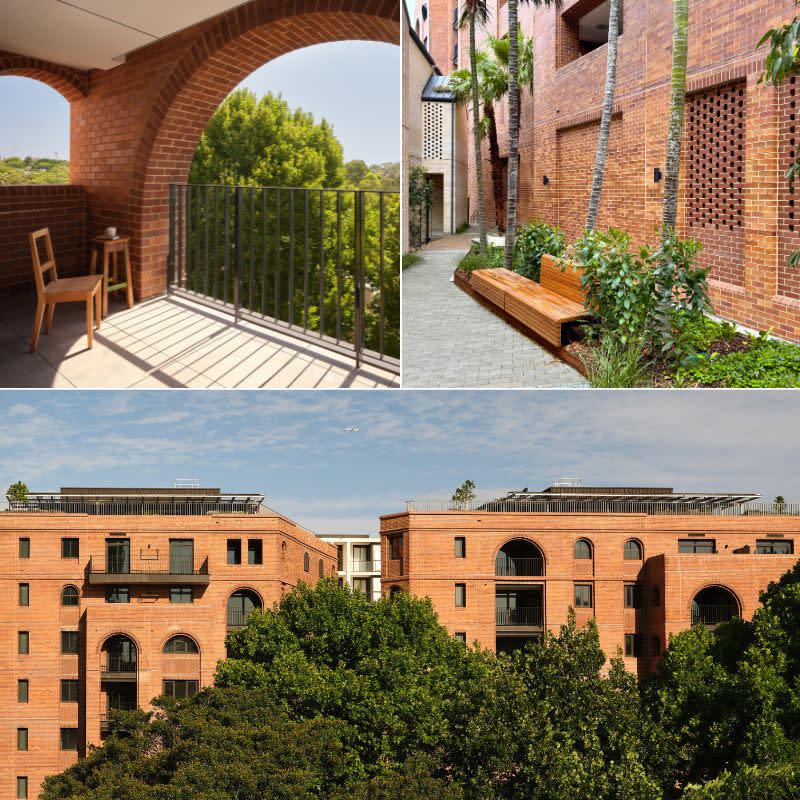
The project was officially opened on March 26, with residents expected to move into the development in April 2026.
Homes NSW chief executive Rebecca Pinkstone said the project demonstrated how good design could deliver more homes within established communities “without losing what makes those places work”.
“The project has been carefully designed to respond to the character of Glebe while improving the quality, accessibility and amenity of social housing for residents,” she said.
“By combining thoughtful design with sustainable construction, we’re delivering homes that are built to last and support strong, connected communities.”
The project comprises a mix of three studio, 40 one, and 27 two-bedroom apartments and a row of five three-bedroom terrace homes.
Dix said the design was built on the belief that housing outcomes could be improved by creating well-planned, sustainable and enduring places where passive building design principles come first to maximise long-term flexibility and minimise energy use.
The design exceeds performance design standards for daylight, cross ventilation, accessibility and amenity, and residents are expected to move in from next month.

Architectural Fantasy: The Summoning of the Glasshouse Theatre

Procurement Crucial to ‘Control or Chaos’ in 2032 Games Delivery

‘Members Stay Longer’: The Commons Reworks Co-Working Model

Woods Bagot Brings ‘Great Australian Light’ to Our Newest Airport


