

Sponsored ContentPartner ContentFri 28 Aug 26
How Developers Can Turn Internet Infrastructure into Income

For most developers, internet connectivity sits somewhere between a compliance obligation and a finish-line task. It’s often a utility arranged late in the construction cycle and quickly forgotten.
Gigafy operations director Karl Graf said this is a costly miscalculation, and that the developers getting it right are generating solid long-term returns from an asset they already own.
The Australian-owned carrier has spent more than 20 years building fibre internet infrastructure purpose-built for multi-residential developments, connecting more than 42,000 apartments across 300-plus sites nationally.
Gigafy’s pitch to developers is not simply faster internet, it is a commercial partnership structured to deliver revenue over the life of the building.
Timing is essential
Decisions made or deferred at the design and documentation stage can quietly constrain a development’s connectivity options for decades.
Risers, conduit and pathways designed without sufficient fibre capacity mean having to open ceilings, walls and risers in a live building to fix later.
Backhaul connections under-sized at construction set a speed ceiling for every resident in the building, one that is expensive and disruptive to remedy.
Buildings that run separate cabling for internet, TV, CCTV, access control, building management systems and EV charging pay more to build and more to maintain.
These are costs a single consolidated fibre backbone from day one would have avoided.

Built for return, not just connectivity
Gigafy offers three commercial models structured around a developer’s appetite for capital outlay versus long-term return.
The first provides an upfront cash payment based on unit count, with Gigafy funding the install entirely.
The second requires no developer capital and delivers an ongoing revenue share over the life of the network.
The third has the developer contributing to installation in exchange for a larger ongoing commission.
“The meaningful difference is capital versus return,” Graf said. “We tailor the exact structure to each project, and we can model the options for a specific building so the developer can compare the ROI.”
What each model returns depends on the building. Unit count, backhaul connection costs, expected plan mix and how many residents take up a service all affect the return, which is why a detailed feasibility is run project by project to provide an accurate forecast for the developer.
Relieving the compliance burden
The compliance dimension is one developers frequently underestimate. Gigafy holds statutory infrastructure provider status and is one of a select group of ACCC-approved carriers operating under full functional separation.
That means the regulatory obligations sit with Gigafy, not the developer.
“When Gigafy builds the network for a development, we become the Statutory Infrastructure Provider for that site,” Graf said. “Getting the connectivity compliance right, and keeping it right, is our responsibility, not theirs.”
Proof of concept
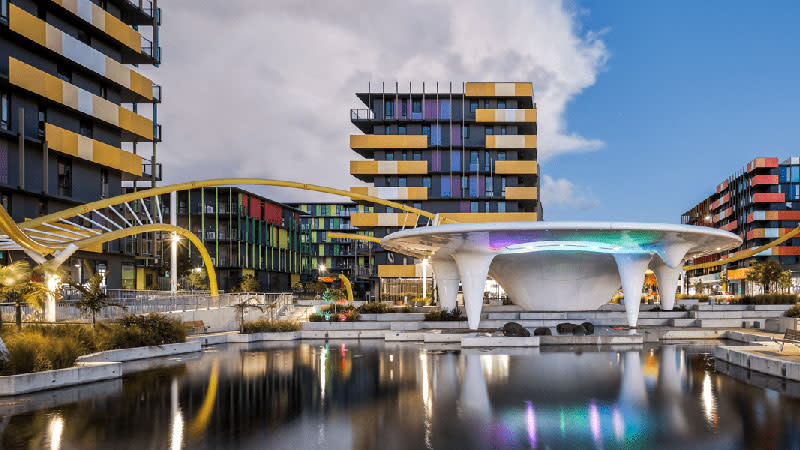
The Smith Collective on the Gold Coast shows what that partnership looks like at scale.
Converted from the 2018 Commonwealth Games Athletes’ Village into Australia’s largest build-to-rent community, the 1252-apartment precinct required a full connectivity rollout completed in eight weeks.
The development has since been studied by state governments and leading developers as a validation of the build-to-rent model’s long-term viability.
The speed of delivery came down to end-to-end ownership of the process.
“There’s no handballing between various third parties, which is usually where timelines blow out,” Graf said. “We own and operate the network we build, so we’re not waiting on a third party to provision or activate services.”
What a resident experiences on move-in day is the sum of every connectivity decision made before they arrived.
Asset mindset starts at DA stage
Developers who will get the most from their connectivity infrastructure are the ones who treat it as an asset from the day they engage a builder, not a utility to be resolved at practical completion.
“The number of networked devices and their required bandwidth is going to keep growing at an exponential rate,” Graf said.
“It’s critical to design and build a network that can scale and support the anticipated connectivity requirements in 5 to 10 years time.”
The Urban Developer is proud to partner with Gigafy to deliver this article to you. In doing so, we can continue to publish our daily news, information, insights and opinion to you, our valued readers.





