
IndustrialLindsay SaundersWed 06 May 26
Boral, Dexus Plot $10bn Melbourne Logistics Precinct

A huge quarry west of Melbourne will become home to one of Australia’s largest logistic precincts under plans flagged by two of the nation’s biggest companies in their fields.
The plan for Ravenhall, about 20km from the CBD, are the result of a joint-venture agreement between building materials company Boral Limited and developer Dexus.
Their planned Ravenhall Logistics Precinct would rise on Boral’s 630ha landholding, adding a logistics and warehousing hub with a potential lettable area of up to 2.5 million square metres.
The site includes an existing rail spur linking to the Port of Melbourne, enabling potential multimodal logistics capability increasingly sought by major occupiers, as well as direct access to the Western Freeway. It is also near the planned Outer Metropolitan Ring Road.
Under the joint venture, Boral will contribute land progressively at market value following rezoning and retain a 50 per cent interest, with Dexus and its capital partners holding the balance.
The project is expected to reach a final value of $10 billion and will take decades to fully roll out.
The Ravenhall site has operated as the Deer Park Quarry since 1968 and is a key supplier of basalt to Melbourne’s construction sector. Extraction will continue alongside the staged development.
Boral chief executive Matt McKenzie said the partnership highlighted the long-term value embedded in the company’s landholdings and supported a capital-efficient growth model.
“Ravenhall is one of the most strategically important industrial sites in Australia,” he said.
“This partnership with Dexus allows Boral to unlock that value in a disciplined, capital-efficient way—contributing land rather than cash.
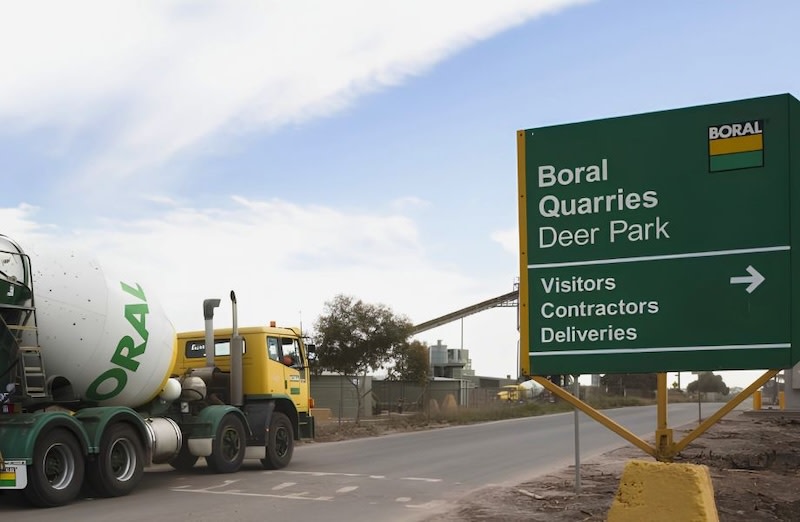
“Importantly, the phased development structure means our quarrying operations will continue uninterrupted.
“Using the sheer scale of the site, we will sequence development stages around existing operations to maintain continuity of hard rock supply to the Melbourne market.”
At full capacity, the precinct is forecast to contribute up to $14.9 billion annually to the Victorian economy and support more than 31,000 full-time equivalent jobs.
The staged delivery model is expected to allow the project to respond to market demand over time while maintaining essential construction material supply to Melbourne’s infrastructure pipeline.
The partnership between a materials producer and a major real estate group highlights increasing collaboration required to deliver large-scale, long-term industrial developments.
Melbourne’s western corridor has become a major focus for logistics investment driven by population growth, infrastructure upgrades and relative land availability.
Industrial market demand has remained strong for large-scale, well-connected sites capable of supporting e-commerce, advanced manufacturing and supply chain resilience.