

2026 Outlook: Developers Pushing Ahead are Gaining Momentum

As we head into 2026, the development market is finally showing the signs of life that many have been anticipating for some time now.
After a prolonged period defined by hesitation, feasibility freezes and deferred decision-making, indicators point to real supply re-emerging across housing markets—particularly where buyers have been waiting on the sidelines.
This isn’t a classic ‘boom’ returning.
It’s a transition year: one where supply signals are strengthening but the ability to convert that potential supply into delivered projects depends heavily on certain sectors, capital structures and delivery strategies.
Demand is strong and supply may begin to lift
Housing demand has been building for some time, buoyed by strong population growth, limited new supply and a rental market that has kept pressure on affordability.
These fundamentals aren’t new—but what is changing in early 2026 is that developers and capital partners are finally moving from analysis paralysis into practical decision making.
Feasibilities that sat on the shelf in 2024 and 2025 are being dusted off. Sites once earmarked for ‘later in the cycle’ are being reconsidered.
That’s a meaningful shift in tone and it reflects a market that sees demand at workable price points, even if cost pressures haven’t reversed.
Residential and industrial are best positioned
The projects moving forward share a clear sector bias.
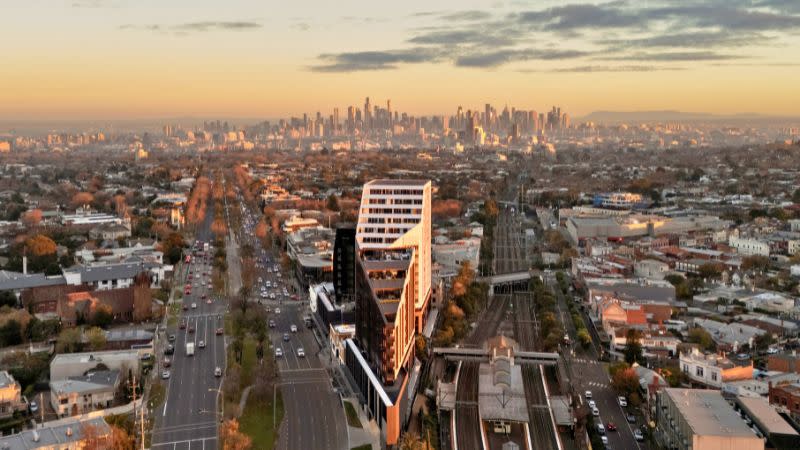
Residential remains the standout, particularly well-located premium apartment projects aimed at downsizers.
This segment benefits from multiple tailwinds: ageing demographics, equity-rich buyers, constrained supply of high-quality product and a preference for completed or near-complete stock.
Importantly, downsizer-led demand is less sensitive to short-term rate movements and more focused on lifestyle, certainty and quality—making it more resilient.
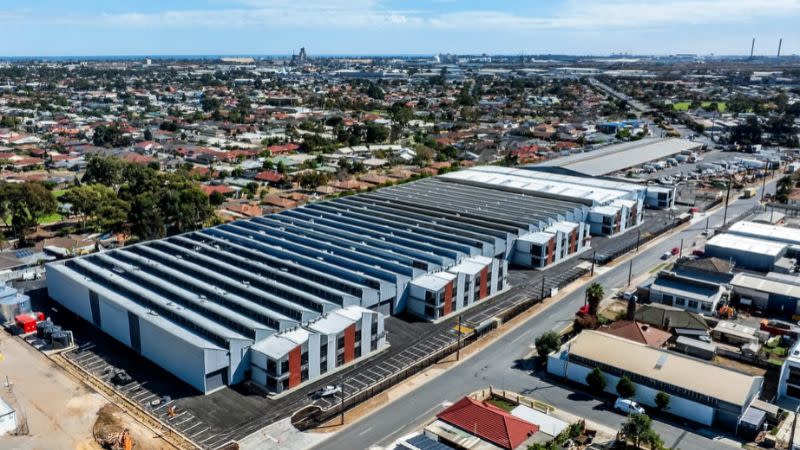
At the same time, industrial development continues to attract confidence, supported by structural demand drivers including logistics and online growth.
Industrial assets often offer clearer exit pathways due to tight vacancies and limited industrial land supply causing a supply problem.
Interest-rate noise vs delivery reality
Following the decision yesterday (February 3) by the RBA to increase interest rates again, the market’s attention has swung back to the cost of capital.
But developers making decisions in 2026 aren’t waiting on a perfect rate outlook—they’re underwriting projects on the assumption that funding costs will remain higher for longer.
In this environment, feasibility discipline, funding certainty and execution capability matter far more than trying to time the next move in rates.
Private credit is playing a bigger, more flexible role
One of the most important shifts shaping the 2026 outlook is the continued evolution of private credit in the development funding landscape.
Private credit providers are increasingly filling the gap—not simply as lenders of last resort but as strategic partners offering flexibility around structure, timing and capital deployment.
For borrowers, this has expanded the range of available funding solutions.
Private credit is enabling earlier funding and bespoke risk-sharing arrangements that better reflect modern development realities.
In many cases, this flexibility is allowing otherwise viable projects to proceed despite a more traditional banking environment—rather than crowding out traditional lenders, private credit is complementing them—broadening choice for developers and supporting projects that are well structured but don’t fit rigid banking models.
Execution will separate those who succeed from those who wait
If 2025 was a year of hesitation, 2026 is shaping up to be a year of selective execution.
Developers with the right fundamentals—secured approvals, robust delivery plans, conservative risk buffers and credit structures that reflect reality—are the ones making progress.
Those still chasing perfect rate conditions or waiting for an idealised cycle environment may find the market passing them by.
What 2026 really looks like:
Demand is strong, underpinned by demographic fundamentals.
Interest rate expectations remain noisy but higher rates for longer have been understood for some time now
Private credit continues to grow, evolve and expand borrower options
In short, 2026 won’t be marked by a sudden boom. It will be defined by a slow but real return to activity, with rates, funding and execution quality setting the terms.
Developers, investors and lenders who recognise that dynamic—and act on it—will define the next phase of the cycle.
About the author
Matthew Samuels, Woodbridge Capital executive director investments.
The Urban Developer is proud to partner with Woodbridge Capital to deliver this article to you. In doing so, we can continue to publish our daily news, information, insights and opinion to you, our valued readers.


