
ResidentialTaryn ParisThu 30 Apr 26
WA Dominates HIA Housing Scorecard as Market Splits

Western Australia has not only held onto its top spot in the nation’s housing recovery, it has widened the gap.
The latest Housing Scorecard from the Housing Industry Association benchmarks each state and territory against long-term averages across home building, renovations, lending and population flows—offering a clear view of how uneven the national recovery has become.
While WA, South Australia and Queensland have chalked up continued growth, the nation’s biggest states are lagging, according to HIA senior economist Tom Devitt.
“Western Australia retained its status as Australia’s strongest home building market, even extending its lead, atop HIA’s latest Housing Scorecard,” Devitt said.
Western Australia’s dominance was broad-based, with the strongest detached housing and renovations sectors, while ranking second in the multi-residential market.
That strength was fuelled by population growth that outpaced the rest of the country, Devitt said.
“Activity has been supported by the most impressive migration dynamics in the nation, with tens of thousands of arrivals each year from both overseas and interstate.”
Western Australia is not alone at the top—but it is clearly ahead. Queensland and South Australia round out the top three.
HIA Housing Scorecard
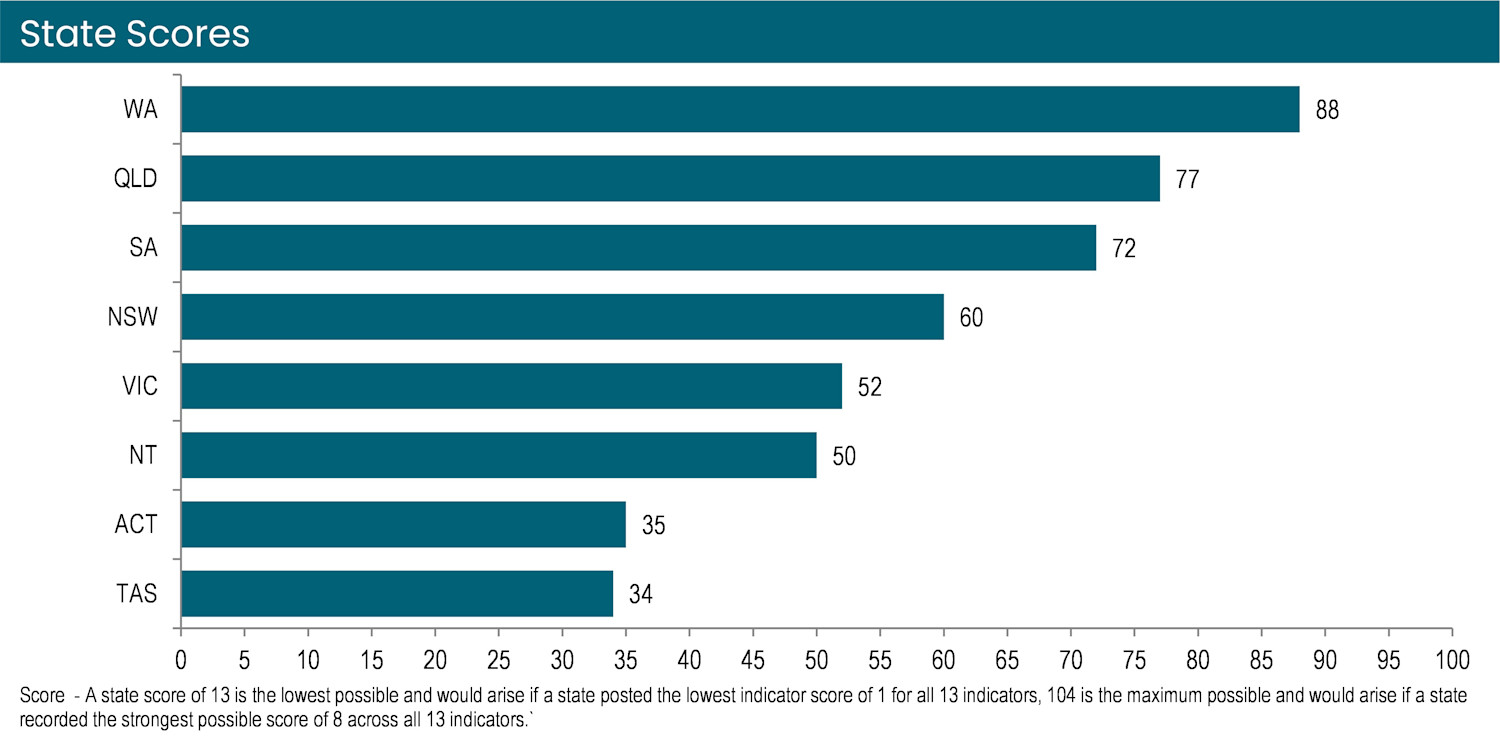
Devitt said the three states were “comfortably ahead of the other jurisdictions, leading the national recovery across most individual indicators of housing and renovations activity”.
Further down the rankings, the recovery becomes less certain.
“New South Wales, Victoria and the Northern Territory sat in the middle of the pack in this Housing Scorecard,” Devitt said.
“All three jurisdictions are still seeing relatively weak volumes of new home building entering the pipeline.”
Even so, demand fundamentals remain intact.
“Underlying demand for housing in these jurisdictions is being supported by the continued inflow of overseas migrants,” he said. “Signs of strengthening activity in these markets are expected to continue through 2026 and beyond.”
At the bottom end of the scorecard, the challenges are more entrenched, Devitt said.
“Rounding out the Housing Scorecard are the Australian Capital Territory and Tasmania, both struggling to get off the bottom of the list for a number of years now,” Devitt said.
“Both jurisdictions underperformed on a number of indicators of detached housing, multi-unit and renovations activity.”
Population trends are compounding the issue, according to Devitt.
He said continued interstate migration from Tasmania was compounded by the state receiving fewer net overseas migrant arrivals than its decade average.
For these lagging markets, any recovery remains tentative at best, he said.
“It is arguably too soon to see sustained evidence of recovery in Tasmania’s approvals or building activity data, and only early signs in the Australian Capital Territory,” Devitt said.





