
Sponsored ContentPartner ContentMon 06 Jul 26
Why SEQ-NSW Growth Corridor Demands Smarter Planning Advice

A super region is forming along Australia’s eastern seaboard, and the old rules for developing in it no longer apply.
South-East Queensland and Northern New South Wales have emerged as one of Australia’s most active development corridors, driven by population growth, lifestyle migration and a structural housing undersupply.
Capturing that opportunity demands a different approach to planning strategy—one that begins well before a site is acquired.
Town Planning Alliance (TPA) principal Vu Nguyen has practised planning in the corridor for 25 years.
He has seen it evolve from a collection of loosely connected councils into what he now describes as a super region that extends well beyond Brisbane and takes in the Sunshine Coast, Gold Coast and Byron Bay.
“Everyone will tell you the first answer is the Olympics, but in my opinion this region was going well before that came into play,” Nguyen told The Urban Developer.
“It’s got a lot to do with lifestyle and amenity: the right climate, the right demographics, and now the economic and employment opportunities to go with it.”
The Regional Movers Index recorded its highest-ever figures for internal migration to regional areas this year. The shift is structural rather than cyclical.
“It’s not infrastructure underpinning that shift, it’s user behaviour,” he said. “Since Covid, people are more prepared to travel because we’ve moved from living in an employment precinct to choosing a lifestyle precinct.”

Development opportunity come with planning risk
The corridor’s growth creates significant opportunity but also considerable planning complexity.
Each council operates with its own assessment culture, political priorities and appetite for different development typologies.
Navigating that complexity before acquisition, rather than after, is where feasibility is made or lost, Nguyen said.
One issue is that different councils rely on “muscle memory” for how they assess different typologies.
“What residents expect from apartment living today, in terms of lifestyle, amenity and design, is fundamentally different to what was being delivered 10 or 15 years ago,” Nguyen said. “Many councils are still assessing those proposals through the same lens.”
How TPA frames its advice
TPA applies a fast-fail framework to every site inquiry, screening for reasons to reject a project before resources are committed.
The framework is built on a simple principle: honest negative advice is more valuable to a client than optimistic advice that doesn't survive contact with reality.
“It’s about the honesty, that it’s safe to say no. Honest is more beneficial than ‘ambitious advice’—even if it’s negative,” he said.
Of every 10 inquiries received, seven fail at first screen—on zoning, flooding, vegetation or civil services constraints—and typically one more falls away after due diligence.
“I’m not interested in performing CPR on a site that doesn’t work,” Nguyen said. “If it’s dead, I’ll tell you it’s dead. We’re the canary in the mine.”
Nguyen poses the same question to every client at the outset of a project.
“If you can only choose one, do you want speed, certainty or yield?”
“More often than not, they need certainty,” Nguyen said. “If I give you certainty, you build your timeframe around that. If you want speed, I’ll make you more compliant. If you want yield, we could be strapping in for years.”
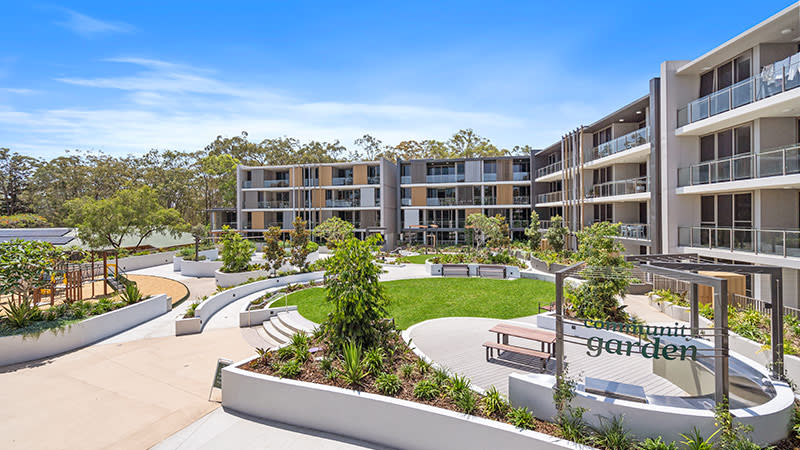
Operating across Queensland and New South Wales requires fluency in two distinct statutory systems. Queensland operates on a performance-based planning regime; New South Wales remains largely prescriptive.
“If you go down to Coolangatta where the state border, the stark difference in in built form on either side speaks for itself,” Nguyen said.
The consequences of that divide go beyond design outcomes. In a performance-based system, applicants have room to negotiate. In a prescriptive one, the rules are the rules, and so are the financial obligations attached to them.
Infrastructure charges in Queensland are payable prior to commencement of use; in New South Wales they fall due at building approval.
It’s a timing difference that, on a 90-apartment project over a three-year program, has significant cash-flow exposure Nguyen said can be “one of those thousand cuts that can kill a project”.
“Land isn’t getting cheaper and construction costs aren’t coming down,” he said. “If the plan-right piece doesn’t deliver an exceptional outcome, the numbers often don’t stack.”
For the next two to three years, all three levels of government are aligned on housing supply for the first time in a long time, which Nguyen hopes brings with it more opportunity.
“The housing need and the Olympic delivery imperative is a good catalyst to step away from decades-old planning approaches and reconsider more contemporary responses to development and, more importantly, how we deliver it.”
The Urban Developer is proud to partner with Town Planning Alliance to deliver this article to you. In doing so, we can continue to publish our daily news, information, insights and opinion to you, our valued readers.





