
Build-to-RentClare BurnettThu 30 Apr 26
Sentinel Fights Off Challenge to 350-Home Melbourne BtR Plan

An international investment manager has won approval for a 350-home North Melbourne build-to-rent project after objectors escalated their complaints to the Victorian Civil and Administrative Tribunal.
New York-based Sentinel Real Estate submitted plans for 23–47 Villiers Street in late 2024.
The US investor bought the site in 2023 to support its Australian build-to-rent venture alongside Dutch pension fund manager PGGM—Sentinel’s sixth build-to-rent project in Australia.
The area is home to Australia’s largest hospital precinct, including The Royal Melbourne Hospital and The University of Melbourne, and is 400m from Parkville train station and under 2km from the Melbourne CBD.
The US investors proposed a two-tower project of 11 and 12 storeys with communal spaces and public open space.
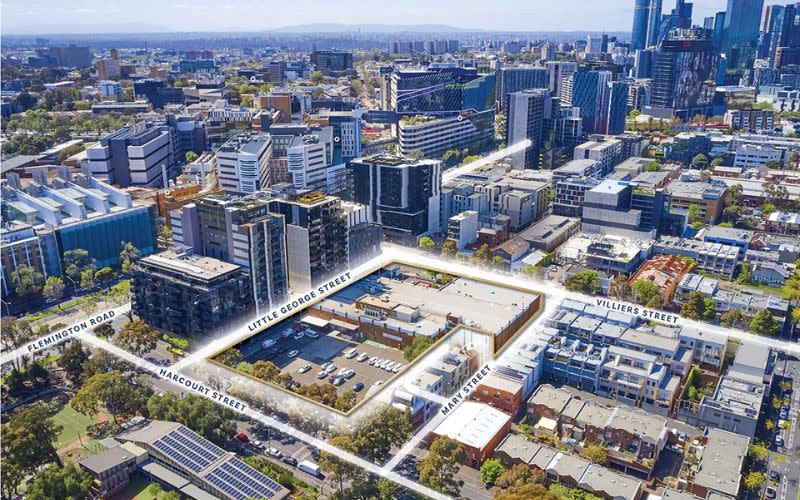
The homes comprised 19 studio units, 211 of one bedroom, 92 of two and 28 of three bedrooms across two towers that were planned to sit on a shared podium on the 6528sq m site, which is vacant save for a substation.
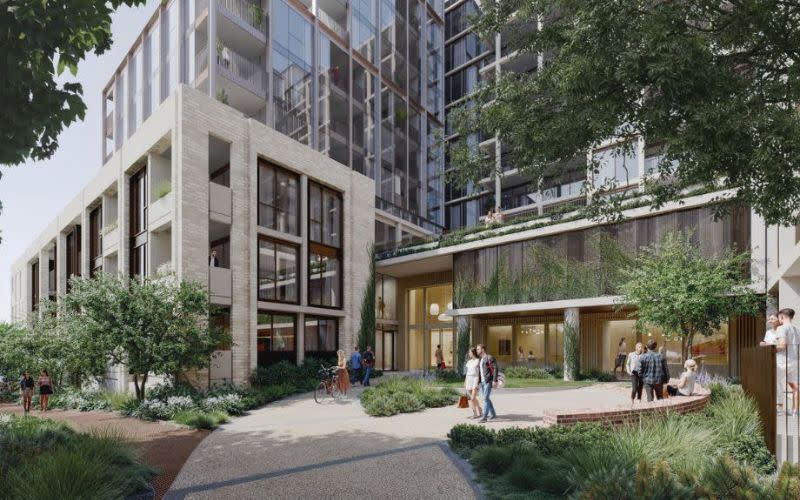
Also proposed was parking for 264 cars and 445 bikes, as well as 1748sq m of communal open space including an external terrace and pool areas, a business hub, lounge and gym.
The plans from Architectus also detailed proposals to widen Little George Street as well a a footpath to Mary Street.
But after a permit was granted for Sentinel’s project in November 2025, three separate applications for review were lodged over concerns that the project was an overdevelopment of the site, with “excessive building bulk and height” as well as increased traffic and reduced car parking provisions.
“Too tall, lack of respect”
While the objectors acknowledged the site has “strategic characteristics” that justified significant development, they said the proposal “falls short” of planning policy controls.
They argued that the project was too tall and failed to respect heritage values, resulting in unacceptable amenity impacts and overshadowing heritage-listed terraced houses at 66-68 Harcourt Street.
But the Department of Transport and Planning continued to support the proposal, finding that it fulfills the purposes of the zone and design objective of development overlays on the site.
The tribunal highlighted that build-to-rent offered a different and secure long-term tenure model for the area, which would encourage the ongoing maintenance of the building.
VCAT noted that 3 per cent of the homes would be set aside for affordable housing for 15 years.
The VCAT presiding member Kate Paterson also said that the height controls for the area were discretionary, and that an appropriate transition was achieved from higher rise buildings surrounding the project site towards lower scale residential on Mary Street.
Paterson acknowledged that heritage buildings were “routinely” located next to contemporary development, and that the podium frontage of Sentinel’s proposed building appropriately responded to the area, without overshadowing the building.
It affirmed the initial decision of the Department for Transport and Planning, and granted the permit for Sentinel’s project.
Sentinel’s build-to-rent ambitions
At the time it acquired the site, Sentinel Australian managing director Keith Lucas said the acquisition was a “meaningful opportunity to deliver a significant boost in housing choice for the area that will support the rapidly growing health and education precinct”.
PGGM senior director private real estate Jikke de Wit said the fund manager primarily invests on behalf of the health sector.
“So we are very pleased that our investment in this project will support the creation of quality and low carbon housing that is well-positioned to benefit other healthcare professionals, while generating healthy, long-term returns for our clients,” de Wit said.
The approval is a major milestone in Sentinel’s build-to-rent plans for Australia as its second Melbourne site. Sentinel has previously delivered the 172-home The Briscoe at West Melbourne.
The US investor now has more than 1600 rental units in progress and operation in Australia, including its first Queensland projec,t next to Robina stadium on the central Gold Coast; and South Australia’s first build-to-rent project.