

Industry Reset Looms After Qld Productivity Bombshell

Major construction industry reforms are on the horizon for Queensland after its reinstated Productivity Commission released its final, damning report.
The Queensland Productivity Commission review, submitted to the Queensland Government late last year after an interim report released last July, presented a dire diagnosis of the industry’s problems.
The report highlighted “systemic issues” as a result of ongoing recovery from Covid and partly due to an “unconstrained government capital program”.
The Commission, which was reinstated last March, blamed procurement processes which have increased costs, exacerbated adversarial conditions and “created a culture that is conducive to poor productivity”.
The Commission made 64 recommendations to reset the way the industry operates.
These suggestions range from relaxing land use regulations near transport and urban infill and city fringe areas and opting out of National Construction Code standard changes, to reforming government procurement practices.
The diagnosis
The report described productivity growth in Queensland’s construction sector over the past 30 years “weak” with labour productivity only 5 per cent higher than it was in 1994–95.
Critically, the report found a major productivity dip since 2018, of 9 per cent.
The Commission claimed that if productivity had been maintained at pre-2018 levels, Queensland could have delivered 77,000 new homes in the intervening period.
This would have been “sufficient” to meet the current housing shortfalls in the state, it said.
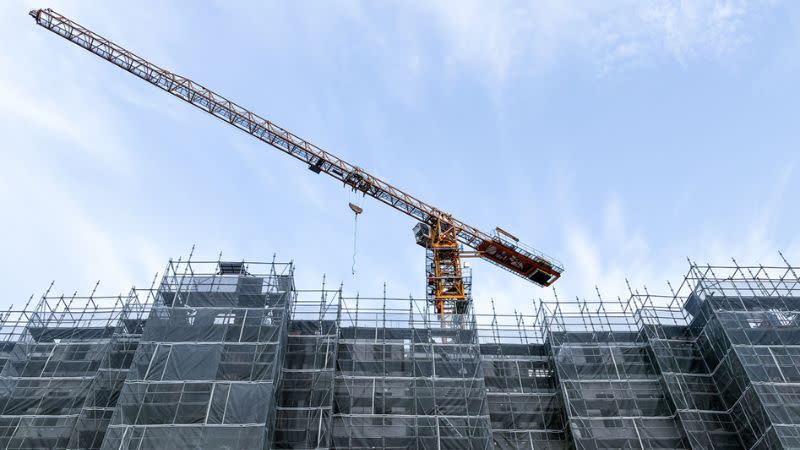
Queensland’s construction pipeline has doubled since June 2020, it said, while the value of total work done has increased by only 42 per cent.
This means the gap between total work done and total work yet to be completed has almost tripled, increasing from $13.3 billion to $34.3 billion.
The 458-page report, published following 86 stakeholder meetings across the state and more than 250 submissions from the public, highlights major structural problems in the Queensland construction sector.
It blamed the productivity dive on the cumulative effect of “regulatory burdens and sub-optimal procurement practices”.
“Due to the magnitude of the issues, the usual policy responses are no longer as effective, stakeholders are frustrated, and some industry participants are opting to leave the Queensland market or the industry altogether,” the report said.
The cure
The Productivity Commission emphasised that there was no single silver bullet that would improve productivity in the construction industry.
But it was brutal in its assessment of government procurement policies, onerous bureaucracy relating to industrial relations and health and safety, and workplace culture.
The government has already undertaken one of the Commission’s major recommendations, which was the axing of the Best Practice Industry Conditions, which it permanently cut in November 2025 after a year-long pause.
The Commission laid out other major measures which could help alleviate the pressure:
Reforming prequalifications - temporarily suspended, these rules force subcontractors to be prequalified to work on government projects. It was recommended these requirements be scrapped.
Health and safety reforms - Disputes and issues over “costly” and sometimes “weaponised” workplace health and safety rules should be dealt with by the underutilised Queensland Industrial Relations Commission, with support to be provided for parties going through the process. It also recommended a single, digitised incident reporting framework.
Revised code of practice - the Commission recommended a revised code, starting from the Building and Construction code of practice, to reduce duplication from other areas and focus solely on productivity. It should also have consequences for non-compliance, the Commission said, including exclusion from tendering for government projects.
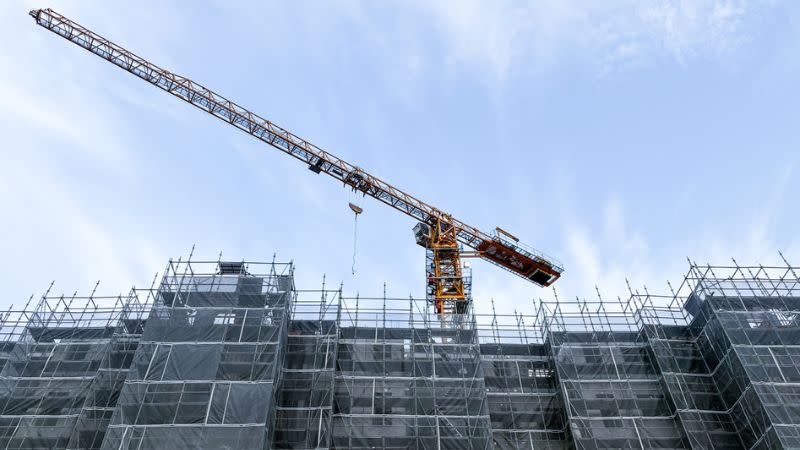
Improving Queensland Government procurement - these policies should focus solely on value for money instead of being “unnecessarily complex and prescriptive” resulting in “inflated bid prices and lower site productivity”. The 1000-page policy should be cut down, and should also be aimed at minimising risk shifting to parties unable to manage the risk, it said.
Establishment of an infrastructure body - a new organisation to rationalise and co-ordinate all government infrastructure pipelines should be introduced, the Commission said.
Improve regulation of land use - restrictions on everything from housing density of height, minimum lot size, blanket character requirements and car parking minimums were criticised as costly. The Commission recommended making land use regulations less restrictive zoning reforms, targeting well-located areas including around transport hubs could reduce home prices by as much as 64 per cent, it said. Zoning reform in infill areas and urban fringe areas was also recommended.
Reduce planning complexity - “inconsistencies” between the Building Act and the Planning Act, as well as local variations applied to the Queensland Development Code (QDC), create additional complexity, it said. These Acts should be reviewed by the state government, and force local governments to comply more closely with the QDC.
Independent review into infrastructure requirements - the review should assess the funds required to support required infrastructure, incentivise efficient use of existing infrastructure, and ensure charges align with long-term costs.
Streamline “convoluted” approval processes - the Commission recommended amending the existing state-facilitated development pathway, which is “underutilised”. Affordable housing requirements should be removed, and the Commission also recommended a state-wide planning portal, and making data more transparent to inform decision-making.

Nation Construction Code investigation - the Commission said there was a “strong case” for Queensland to opt out of regulatory changes, including changes to the NCC, and the state should opt out of the recent energy efficiency and accessibility standards.
All minimum financial reporting obligations should be removed - and trust account requirements should be formally reviewed.
Modern methods of construction should be encouraged - while not supporting procurement mandates or direct subsidisation, the Commission recommended addressing regulatory barriers, which prevent scale.
Queensland Building and Construction Commission performance - the Commission recommended that the QBCC should continue to improve, and establish an online licensing registration facility, as well as raising the value of projects where builders require a QBCC license above $3300, a limit which has not changed since 2000.
Attracting skilled workers - the Commission recommended that Queensland recruit skilled workers from overseas, which it said are “under-represented” in the construction industry, and the government should advocate for an increased allocation of skilled international workers.
Taxation of foreign investment - the Commission recommended Queensland Treasury assess the impact of an additional 8 per cent stamp duty on transactions for foreign nationals and corporations, and the additional 3 per cent surcharge on land with a value greater than $350,000.
Enterprise Bargaining Agreements - noting EBAs had been negotiated “under duress”, the report said that the Queensland Government should ensure that its procurement policies do not bias negotiations, including requirements to ensure subcontracting firms have the same pay and conditions as themselves.
Government and industry response
The government agreed, or agreed in-principle, to 51 of the 64 recommendations, including removing prequalification for subcontractors on government projects, removing complex procurement policies and introducing mechanisms for dealing with workplace health and safety disputes.
It also said it would introduce policies to boost the number of construction apprentices and review training courses to support modern methods of construction.
The government said it was progressing Queensland’s participation in the Automatic Mutual Recognition scheme.
“The Government's response to the final report will improve productivity by reforming procurement, improving land use and building activity regulation and aiding labour market operation,” Queensland Treasurer and Minister for Home Ownership David Janetzki said.
The Property Council of Australia said the report provided a “welcome confidence boost” and could prove a turning point for the sector, Queensland executive director Jess Caire said.
“It is also welcome to see the government and QPC acknowledge the critical role foreign investment, and a streamlined taxation framework will play in facilitating new supply and we will continue to advocate for structural reform to attract the critical investment Queensland needs,” Caire said.
At the same time as the report, the Australian Bureau of Statistics revealed this week that Queensland experienced a modest increase of 4.85 per cent in building completions for the September 2025 quarter.
“[The] building completions data reinforces there is no time to waste in switching from review to results,” Caire said.
“Given the alarming decline in productivity over the last decade it is imperative that the government does not delay in implementing reform across the multitude of areas stifling productivity.”

Architectural Fantasy: The Summoning of the Glasshouse Theatre

Procurement Crucial to ‘Control or Chaos’ in 2032 Games Delivery

‘Members Stay Longer’: The Commons Reworks Co-Working Model

Woods Bagot Brings ‘Great Australian Light’ to Our Newest Airport


