
Sponsored ContentPartner ContentMon 15 Jun 26
New Nature-Positive Benchmark Targets Greenfield Precincts

Nature Based Cities (NBC) has extended its industry accreditation framework to precinct-scale residential communities, launching the New Communities Design Guidelines and Scorecard to give greenfield and large brownfield developers a structured pathway to nature-positive outcomes.
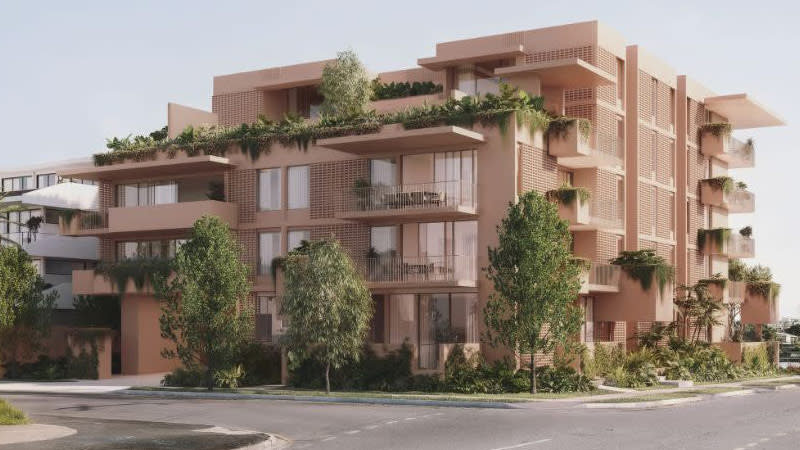
Four projects have so far received accreditation under NBC’s Medium and High-Density residential guidelines, introduced in early 2025.
These include Watts & Wright by Spyre Group, Cliff by Aria, and The Eveline by Hamton Property Group.
Founder Paul Hameister OAM said the expansion was aimed at developers of outer ring greenfield projects and large inner ring brownfield precincts “who want to champion nature and living landscape as a defining feature”.
The assessment process
Projects seeking accreditation are independently assessed against key criteria including ecology, tree canopy, biodiversity and walkability.
Once a masterplan is submitted for planning approval, the scorecard is formalised based on proposed outcomes, with qualifying projects receiving either Commended or Exemplary accreditation.
Developers can conduct an initial self-assessment, typically through their landscape architecture or open space design team, before submitting supporting documentation for third-party review.
Tract director and NBC Advisory Council member Janis Fischer, who was central to developing the framework, said the Commended threshold was within reach for most developers.
“For many developments, achieving commended accreditation will likely require only a few minor refinements—doing some things just a little better than in the past,” Fischer told The Urban Developer.
“The guidelines and scorecard allow you to make informed planning decisions from the moment you acquire a site. They may also influence your decision-making when considering a site for a new community development.”
Fischer said not engaging an ecologist at the outset was the most common shortfall in projects assessed against the scorecard.
Bringing one in early allowed developers to design street networks and open spaces that protect existing vegetation, establish green corridors and achieve meaningful canopy cover.
Even on degraded sites, an ecologist could inform design decisions to attract species displaced by prior land use.
“We’re just asking them to make sure that they’re thinking about nature alongside the other things you should be doing for sustainable development,” Fischer said.
Evidence supports nature-positive approach
Urbis research found park-front houses achieved a 34 per cent price premium over 10 years, while park-front units recorded a 17 per cent premium.
Capital growth for park-adjacent properties averaged 9.6 per cent per annum, compared with 5.0 per cent for the surrounding market.
Rental premiums of up to 49 per cent were recorded at infill masterplan sites in Melbourne.
“Most developers are starting to use nature as part of their marketing, which means they know that it sells,” Fischer said.
NBC’s accreditation is intended to ensure those credentials can be independently verified.
“We like to make sure that they’re not just greenwashing and that they can back it up with results on the ground,” she said.
Accredited projects gain access to NBC branding and marketing tools, including the NBC accreditation mark, designed to provide purchasers with confidence that nature represented in marketing materials would be delivered in the final development.
Submissions are free through the NBC website at www.naturebasedcities.org.au.
The Urban Developer is proud to partner with Nature Based Cities to deliver this article to you. In doing so, we can continue to publish our daily news, information, insights and opinion to you, our valued readers.





