
Sponsored ContentPartner ContentThu 30 Apr 26
Sales Risk Now Property Developers’ Biggest Hurdle: Laver

The fundamentals of property development have not changed. Buy the right site, secure planning, build at a viable cost, sell.
For most of the past decade, developers could treat that final step as the most manageable of the four—a matter of timing and marketing spend rather than genuine strategic risk.
That assumption no longer holds.
Sales risk has moved to the front of the development risk register. Unlike construction—where cost overruns are painful but largely quantifiable—exposure on the sales side is harder to quantify, easier to misjudge and repercussions slower to surface.
By the time a problem becomes visible, the margin has usually already gone.
The most common challenge Laver inherits when appointed to a troubled project is not a weak market but floored pricing and release strategies. It is a price list that has been worked from the top down, with the best stock sold first, leaving the least desirable inventory unsold when the developer’s debt exposure is greatest.
Laver Residential Projects associate director John Faulkner has seen this happen all too often.
“The first 80 units in a 100-unit development pay the bills,” he said. “The last 20 is where the profit sits—and that’s also the point at which the developer’s debt is at its peak.
“When you are cornered with that final tranche of holding product that doesn’t meet market demand, that’s what puts businesses under pressure.
“It’s not just about the first transaction—at Laver, we pride ourselves on selling the last unit, not just the first.”
The challenge, Faulkner argues, begins much earlier than most developers recognise.
When a project marketer is appointed after design decisions are locked, pricing is framed and the go-to-market strategy is already set, the window for meaningful input has largely closed.
You are now at the mercy of the market with limited ability to pivot.
For Laver Residential Projects director James Lampropoulos, the shift reflects a broader change in how developers must approach risk from the outset.
“Historically, developers have focused heavily on construction and funding risk—because those are the variables you can see and model,” he said.
“What we’re seeing now is that sales risk, if not addressed early, can quietly erode profitability well before a project reaches market.
“You can no longer rely on market momentum to carry a project. There needs to be alignment between product, pricing and buyer demand from day one.”
That alignment, he argues, is where most projects either succeed or fail—long before a display suite opens.
Pushing for change
The firm’s three senior principals (pictured at top, from left) Faulkner, Lampropoulos and director Dennis Vertzayias, bring more than 100 years of combined experience across development finance, project delivery and sales.
They are now regularly invited to sit on clients’ project control group committees, contributing live market intelligence on buyer behaviour, product mix and design well before a sales campaign begins.
Engaged at the feasibility and acquisition stage, Laver can provide intelligence that materially changes what a developer buys and how they build it—from buyer demand levels and preferred apartment mix through to sizing, inclusions, amenities and the price points at which the market will actually transact.
That intelligence can shape how a developer structures commercial terms, plans a construction program, or how it sizes a project altogether.
“Today, success is less about how well you market a project and more about how well the product meets buyer demand,” Lampropoulos said.
“Buyers are highly educated and very selective,” Faulkner said. “What was considered a premium inclusion five years ago is now a baseline expectation.”




1 of 6
The value of early engagement
Early involvement produces outcomes a later appointment cannot replicate. Even relatively minor design decisions can have a measurable impact.
On one project, repositioning a living area from the front to the rear of an apartment type during design development significantly improved both saleability and gross realisable value.
“Developers can get most of it right on their own,” Lampropoulos said. “But it’s that 20 or 30 per cent that is often the difference between making money or not.”
The same philosophy governs how Laver manages inventory once a project is in market.
Each development is mapped through a detailed visualisation matrix prior to release, allowing the team to track demand week on week and manage release pace to protect value across the full campaign, rather than clearing stock early and opportunistically.
Proof is in project success
Vertzayias points to a recent Sydney project as a case in point.
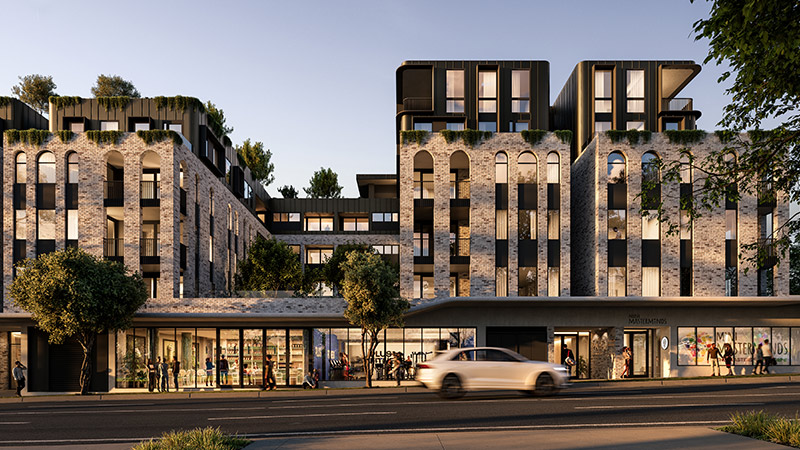
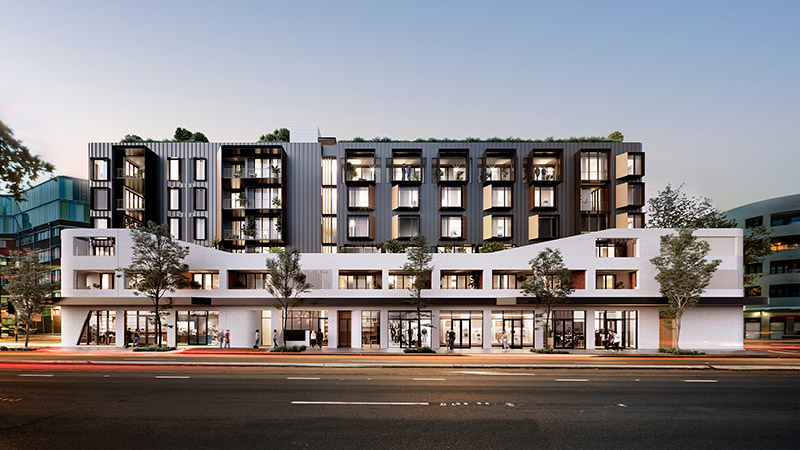
After a flawed pre-sales attempt, Laver was engaged on a 65-unit residential and retail development.
The firm suggested minor design changes, strategically designed to target the strongest buyer groups at the time of sales, completely repositioning the campaign with a fully focused and tailored sales release strategy.
Rather than fixing prices upfront, the firm used real-time buyer feedback from inspections and enquiries to shape a staged, dynamic pricing strategy, strengthening returns on higher-demand stock while recalibrating select apartments as conditions moved.
The project achieved a full sell-out within 12-14 months and, according to the client, “the team demonstrated strong knowledge while constantly guiding and pivoting strategy to drive positive outcomes to both sales momentum and GR, remaining committed through to the final sale”.
More than a cost line
Vertzayias said too many developers treat project marketing as a necessary evil they activate close to launch.
“We think that’s where the risk starts,” Vertzayias said. “We want to change that.
“The funder is the first strategic partner a developer brings to the table. We believe the project marketer belongs there alongside them, from acquisition through to the last sale.
“It is a team effort, all collaborating and contributing to give developers full visibility and the informed intelligence they need regularly to make the right decisions.
“This collaboration gives all parties the confidence to succeed. The funder has confidence their funds are protected, the developer has confidence they will maximise profits and the project marketer has confidence in the product they are selling.
“The developer, the funder, the project marketer—that’s the triangle that gets a development right.”
The Urban Developer is proud to partner with Laver to deliver this article to you. In doing so, we can continue to publish our daily news, information, insights and opinion to you, our valued readers.





