
Developers Paying High Price for Poor Groundwater Planning in NSW

Groundwater mismanagement is costing Australian development projects millions of dollars and months of construction time, with experts warning that a single oversight could have major financial consequences and cause the project to be reconsidered before a slab is poured.
Speaking at The Urban Developer webinar What Lies Beneath: What Developers Need to Know About Basements and Groundwater in NSW, Dincel Structural Walling chief operating officer Steve Darwell and Reditus Consulting principal hydrogeologist Lee Douglass detailed the legislative, financial and design implications of groundwater for basement construction across the state.
Many of the risks they identified may go beyond New South Wales, with groundwater conditions potentially impacting basement design and approval requirements in other states.
NSW rules raise the groundwater stakes
Four key pieces of legislation and guidance govern basement construction where groundwater is affected in New South Wales: the Water Management Act, Water Sharing Plans, the Aquifer Interference Policy, and the Minimum Requirements for Building Groundwater Investigation.
Together, these create a two-stage approval process requiring projects to demonstrate no more than minimal aquifer harm—or face refusal.
Works commencing without a Water Supply Work Approval are illegal under the legislation, with the approval process sometimes taking several months.
Douglass said groundwater was consistently underestimated at the planning stage.
“Groundwater is often treated as an afterthought. Ignoring it or cheapening out on the groundwater issues can lead to significant costs and program delays,” Douglass said. “Don’t make high-cost decisions on poor groundwater information.”

The consequences of overlooking groundwater can be substantial.
Douglass said the Mascot Towers incident was a high-profile example in which inadequate dewatering management contributed to structural failure at a neighbouring site, leaving 131 units uninhabitable and generating an estimated $15 million in damages and legal costs.
Heritage buildings in Double Bay also suffered differential settlement from poorly managed groundwater drawdown and a Gold Coast site near the Nerang River required a 500 per cent upsize of its dewatering system, triggering major cost variations and program delays.
Case for early groundwater assessment
There’s a high price to be paid for poor groundwater planning, Douglass said, but savings are equally possible when it is assessed correctly.
A Monterey development in the Botany Sands area had been quoted more than $900,000 for water treatment alone, based on a preliminary report predicting 1.5 gigalitres of contaminated inflow.
Specialist hydrogeological review reduced costs by more than $500,000 and shortened the construction timeline.
Douglass said that savings of between $1 million and $50 million were achievable depending on project scale.
Tanked basements offer a simpler pathway
Basement design type, be it tanked or drained, carries significant implications for the approval burden.
Darwell said drained basements required a water management plan spanning the full life of the building, which the guidelines define as 100 years, with annual water-take reporting required throughout.
A post-construction plan for drained basements must also be approved by WaterNSW and the NSW Department of Climate Change, Energy, the Environment and Water before an Occupation Certificate could be issued.
Projects extracting more than three megalitres per annum must additionally hold a water extraction licence for the life of the project.
Drained basements may also contribute to a humid environment in habitable areas, creating conditions conducive to mould growth and potentially breaching NCC requirements—ultimately increasing long-term maintenance and remediation costs.
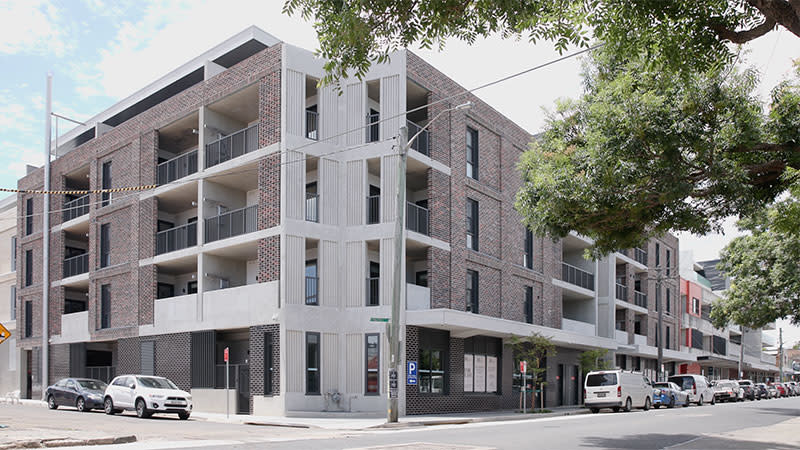
Seven Sydney councils, including Northern Beaches and Woollahra, already mandate tanked basements wherever the aquifer is impacted. Other councils with the same or similar requirements are Bay Area, Wollongong, Penrith, Waverley and Ku-Ring-Gai.
Most tanked applications are deemed low risk, carrying only standard general terms of approval during construction and no post-construction conditions from WaterNSW.
Dincel offers a waterproof basement system that removes the risk of water ingress at basement walls and at the basement slab to wall junction.
Unlike conventional waterproofing systems, Dincel takes full responsibility for the waterproof integrity of the entire basement and is able to provide a 50-year zero leakage warranty.
If a leak did occur within the warranty period, the actual point of leakage is easily identifiable and a re-injection of the Dincel system can be applied locally to eliminate the leak without any disturbance or cost to the building structure and owner/occupier.
The final word
Both experts recommended engaging a hydrogeologist during feasibility before major design decisions are made, to assess whether a tanked basement is the best solution for addressing legislative requirements.
“I would certainly encourage everybody to engage a skilled hydrogeologist right from the outset,” Darwell said.
“In our experience, when we’ve got into the basement and there have been issues on developments, it has predominantly been because a skilled hydrogeologist hasn’t been engaged right up front.
“If a tanked basement is designed in properly at the start, then you’ll get the most cost-effective solution in the long run.”
Douglass agreed.
“Get us in early,” he said. “We can help developers understand what the costs will be and help them minimise that cost from the very start.”
The Urban Developer is proud to partner with Dincel to deliver this article to you. In doing so, we can continue to publish our daily news, information, insights and opinion to you, our valued readers.


