
Sponsored ContentPartner ContentWed 29 Apr 26
Grove: Setting New Standards in Education Infrastructure Delivery

The market still talks about faster education delivery as though it is theoretical. It is not.
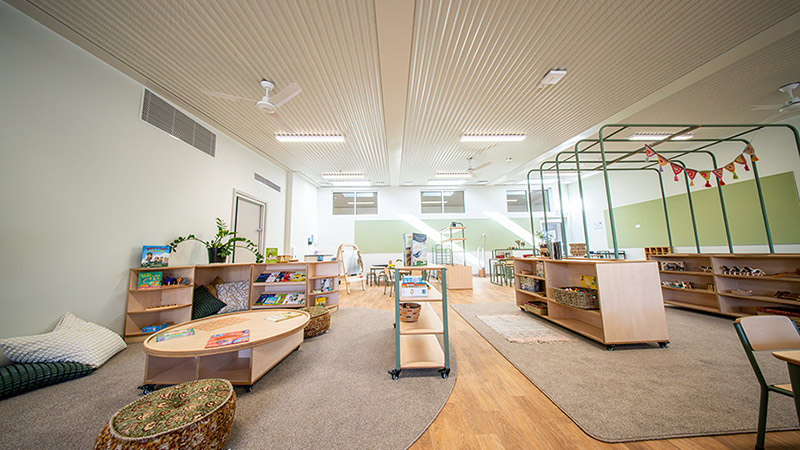
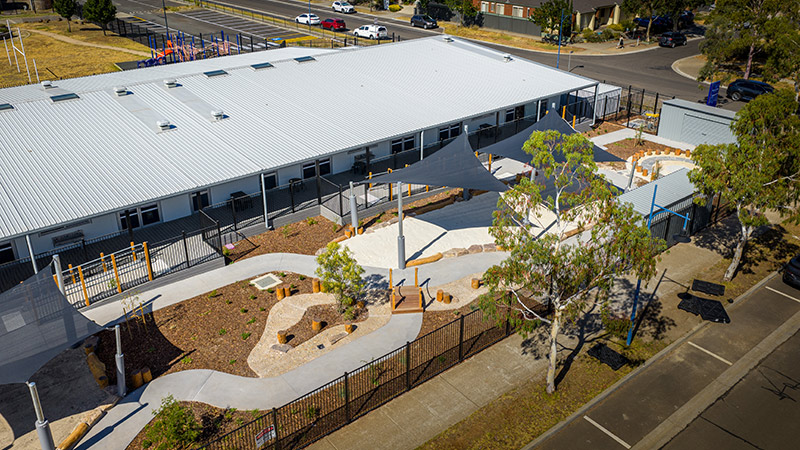
Victoria has already shown that modular delivery works. The VSBA’s modular kindergarten and school programs have proven that templated, repeatable delivery can bring education infrastructure online faster, with less site disruption and greater program control than traditional in-situ construction.
All this without the design trade-offs historically associated with modular builds.
The state is planning a pipeline of kindergartens at schools, with every new primary school expected to have a kindergarten on-site or next door.
The demand task makes the stakes clear
Infrastructure Victoria projects the state will need around 900 new kindergartens and up to 60 new government schools over the next decade and is targeting private and not-for-profit providers to meet some of that kindergarten demand.
The question is no longer whether the model works; it is which developers, funds and private operators are prepared to move early and treat modular education delivery as a genuine first-mover advantage.
The VSBA model has validated standardisation, off-site manufacturing and programmatic delivery at scale. But the size of the pipeline means government cannot carry the full burden of delivery alone. The opportunity for private capital and developer partners is real and, for now, largely open.
From design to handover in 12 weeks
Melbourne-based modular specialist Grove Group illustrates what established capability already looks like in the market.
The company delivers 10 to 12 kindergartens a year and around 60 to 80 school buildings annually and is currently moving into seven projects for October 2026 handover while design is still being finalised.
Its modular pathway can deliver in around 12 weeks from design sign-off, or roughly 16 weeks including design, against around 18 months for a traditional in-situ build.
Grove’s fastest project was completed in eight weeks.
1 of 2
The broader point is that capability already exists in the market, with delivery partners able to continue rolling out facilities at pace if the pipeline is opened. Where a design is templated, it can be priced and designed once and rolled out repeatedly.
Manufacture runs in 20 to 25 days, site works commence ahead of installation and the installation itself takes two to four days, with factory and site activity running in parallel rather than sequentially.
That compression is how time is removed from the program. It is also why modular should now be understood less as an alternative method and more as an established infrastructure delivery strategy for the right education assets.
Proof of scale is already there
By the end of 2026, Victoria says it will have opened 104 kindergartens on school sites since 2019. Grove alone has delivered more than 100 education buildings for annual Day 1, Term 1 requirements, with capacity to produce 60 to 70 modules a month, run 30 to 40 concurrent projects and install up to 20 modules a day.
With growth corridors already mapped, proven template designs available and cost-effective delivery models in place, education infrastructure is one of the most clearly defined investable pipelines currently available to the market.
The question for developers and funds is whether they move before that window narrows.
The Urban Developer is proud to partner with Grove Group to deliver this article to you. In doing so, we can continue to publish our daily news, information, insights and opinion to you, our valued readers.





