
Sponsored ContentPartner ContentWed 13 May 26
Planning Delays Cost Developers as Infrastructure Falls Behind

Australia’s housing supply crisis has less to do with policy ambition than with structural failures in infrastructure delivery, workforce capacity and planning culture.
Future Urban executive chairman Chris Vounasis told The Urban Developer a convergence of systemic constraints is behind the persistent gap between national housing targets and actual supply: insufficient infrastructure investment, a shortage of skilled workers, restrictive rezoning timelines and limited land release.
Governments at every level have prioritised vision over implementation, leaving infrastructure planning underdeveloped against the pace of strategic growth commitments, he said.
Policy announcements have outpaced the administrative capacity required to act on them.
“There is a lack of understanding within various levels of government in regard to the timeframes to deliver housing, the actual cost of development and the lack of skilled labour to construct housing and infrastructure,” Vounasis said.
“Significant policy reform does not automatically translate to efficient decision-making on the ground.”
The infrastructure gap
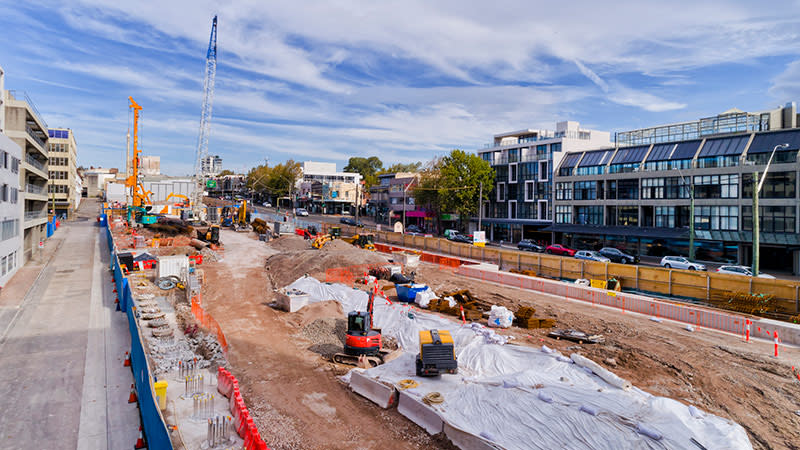
Infrastructure delivery is at the centre of the problem.
Greater promotion and facilitation of private sector solutions would be a more feasible and effective pathway for a range of infrastructure types, he said.
Under this approach, infrastructure is designed, funded and delivered by the private sector before being handed to state agencies.
Unlike government-led delivery, private sector infrastructure is not subject to state or federal budget cycles, meaning it can be brought forward and delivered faster when project timelines demand it.
Vision over implementation
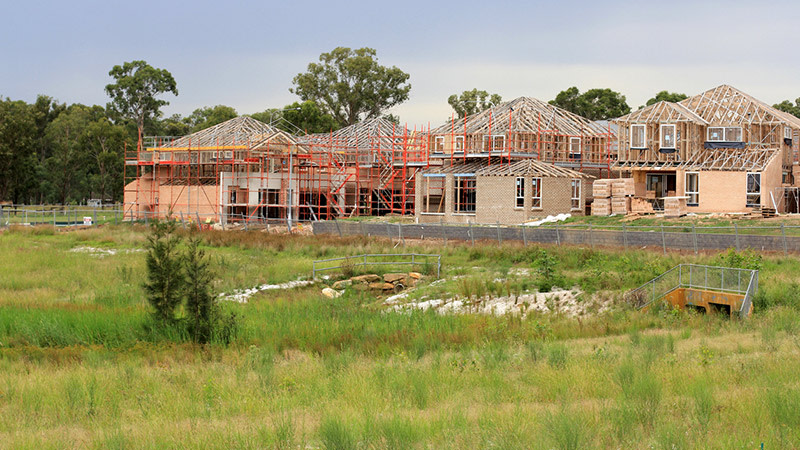
Rezoning activity has compounded the issue by advancing ahead of the infrastructure needed to service newly zoned land.
“This has been a systemic and structural failure,” Vounasis said. “Implementation and infrastructure plans are never as glossy or as pretty as a masterplan.”
The appeal of a strategic vision too often overshadows the practical work of mapping infrastructure requirements, costs and delivery responsibility.
Motherhood-type statements have “been recycled in strategic planning documents at all levels for decades,” Vounasis said, adding that more specific and accountable actions are required “to ensure the rezoning of land works hand in hand with infrastructure planning and provision”.
One underused mechanism in this process is something Vounasis describes as “catalyst rezonings”
These are situations where rezoning a constrained parcel of land can unlock delivery on adjacent land that is already zoned but unserviced.
Both local and state governments need greater flexibility to recognise the strategic value of such scenarios rather than treating them as out-of-sequence development.
Climate and cost
Climate resilience has added a further layer of cost and complexity to project delivery.
Problems typically arise when authorities seek to resolve broader regional stormwater or flood mitigation challenges on private land at the developer’s expense.
Where regional issues are being addressed on private land, infrastructure contribution frameworks should provide a mechanism to offset those costs, Vounasis said.
End-to-end capability
Future Urban operates across a variety policy development, planning approvals and infrastructure advisory functions.
On projects where infrastructure sequencing is genuinely complex, that integrated capability allows the firm to model interim and permanent solutions within a single framework, reducing the risk of fragmented advice producing unworkable or costly approval conditions.
The firm’s approach is outcome focused, driven by a commitment to support the development and growth of the communities and jurisdictions it works within.
Cultural resistance, particularly in established suburbs, remains a delivery constraint that infrastructure investment alone cannot resolve.
A growing number of people seeking to downsize within their own communities are finding that appropriately located medium and high-density development, including aged care and apartment buildings on main streets and adjacent to open space, is being blocked by objectors who sometimes don’t even live in the affected area.
“These locations are best suited to accommodate height and density because the infrastructure and access to services and amenities are already in place,” Vounasis said.
“Too often, even with supportive strategic and policy guidance in place, decisions become political rather than merit based.
“For developers navigating that environment, the difference between a project that proceeds and one that stalls often comes down to the quality of planning advice received at the earliest stages of the process,” Vounasis said.
“Getting that foundation right is what Future Urban is built to do.”
The Urban Developer is proud to partner with Future Urban to deliver this article to you. In doing so, we can continue to publish our daily news, information, insights and opinion to you, our valued readers.





