
ConstructionTaryn ParisThu 23 Apr 26
Energy Costs Push Small Construction and Trade Businesses to the Brink

Rising energy prices are driving a new wave of financial stress across Australia’s small business sector.
Data from credit risk firm CreditorWatch is warning that sole traders–including subbies and trade operators in the construction supply chain–will be among the hardest hit.
The Australian data and analytics company’s latest Business Risk Index reveals energy costs have emerged as a primary stress driver for businesses across the country, compounding existing pressures from elevated interest rates, softening consumer demand and persistent labour shortages.
CreditorWatch chief executive Patrick Coghlan said the data painted a concerning picture for the smallest operators.
“Small businesses are facing a much tougher operating environment than they were a year ago, and the pressure is showing in cash flow, payment defaults and tax arrears,” Coghlan said.
“Rising costs and higher interest rates mean even small shifts in business conditions can have outsized effects, particularly for sole traders.
“What matters is identifying those warning signs early, because once stress becomes visible at the insolvency stage, options narrow very quickly.”
For property developers and head contractors, the implications extend beyond their own balance sheets.
Austalian Wholesale Fuel Prices $A per litre (inc GST)
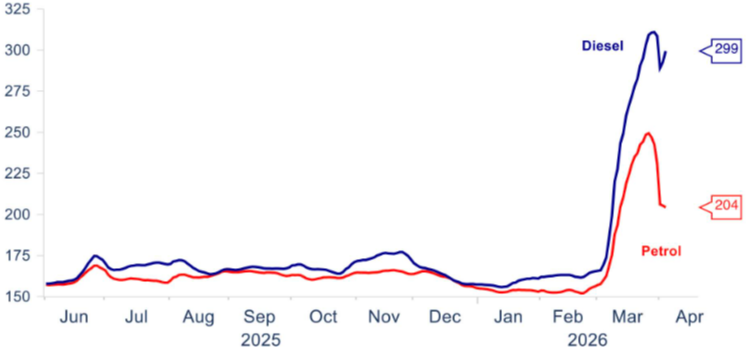
Sole traders and small businesses form a critical layer of the construction supply chain, providing specialist trades, labour and services that underpin project delivery.
Financial distress at this level can lead to delays, defects, and, in the worst cases, mid-project insolvencies.
The CreditorWatch data shows payment defaults and trade payment arrears are rising across sectors most exposed to energy volatility, including manufacturing, food services and construction-adjacent trades.
Business failure rates remain elevated in New South Wales and Victoria, where operating costs are highest and project pipelines remain below the peaks of the 2021–22 boom.
CreditorWatch chief economist Ivan Colhoun said previous analysis had pinpointed interest rates and energy prices as key drivers for insolvency.
“Both have developed negatively in recent months, suggesting a less favourable credit environment in the months ahead,” Colhoun said.
“Hopefully, the two-week ceasefire, recently agreed to, can develop into a more lasting peace plan, because an extended conflict and closure of the Strait of Hormuz was likely to lead to much higher energy prices and supply interruptions, which would in turn set off a chain of events that would likely see the world and Australian economies end up in recession.”
The findings arrive as the construction sector continues its slow recovery from a period of significant contractor failures, with developers and financiers under pressure to de-risk project delivery from the ground up.





