

Dankav Terminates Builder on Mermaid Beach Tower

The developer of a near-complete Gold Coast luxury tower has terminated its head building contract, alleging “multiple material breaches”.
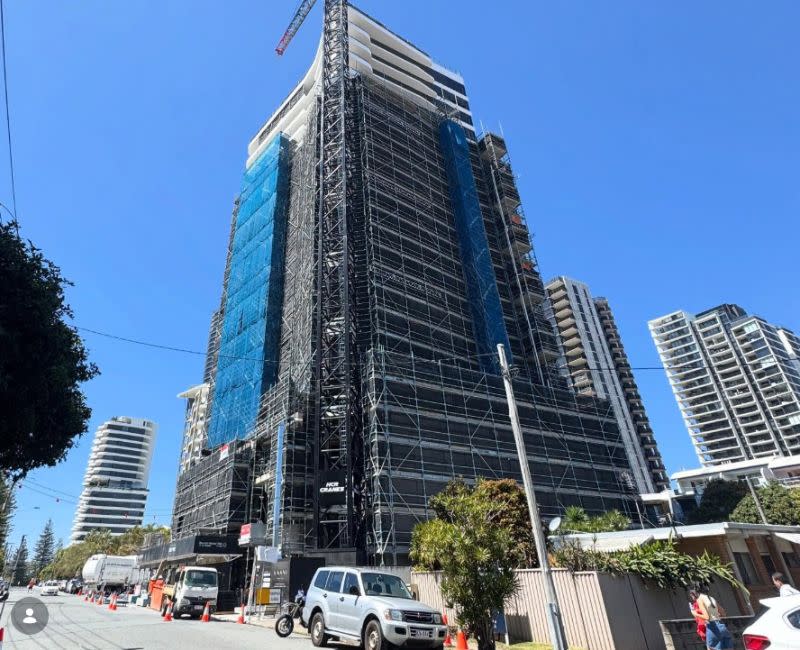
The 52-unit tower, dubbed Laani, is rising at 26-28 Alexandra Avenue, Mermaid Beach. Apartment prices start at $1.2 million.
The project is being developed by Gold Coast-based Dankav, who is also behind The Oxley 1823 at Nobby Beach, and has recently upscaled its plans for The Alfred at Mermaid Beach.
Laani was being built by Groupline Constructions, a Gold Coast builder also tapped for Chapter Two’s $160-million Holm Project at Rainbow Bay and who took on Buildcap’s dual tower project on the Broadwater Parklands after the demise of GCB Constructions.
Dankav confirmed to The Urban Developer that it had terminated Groupline’s head contract on the Laani project.
Dankav managing director Daniel Veitch said the decision to terminate was not made lightly, but followed what he called a prolonged period of “serious and ongoing defaults” on its contract.
“After careful consideration, we decided it was in the best interests of the project [and stakeholders including] buyers and subcontractors (to terminate),” Veitch said.
He alleged the termination occurred “due to multiple material breaches, including but not limited to failures to properly resource the project, ongoing delays, and repeated [alleged] misrepresentations regarding subcontractor payments.”
The dispute is now before the courts—Groupline has filed proceedings in the Supreme Court that are due to be heard in February.
“While it would be inappropriate to comment on the specifics any further at this time, the project remains our priority, and steps are being taken to progress and complete the project promptly and to protect the interests of all stakeholders, buyers and subcontractors,” Veitch said.
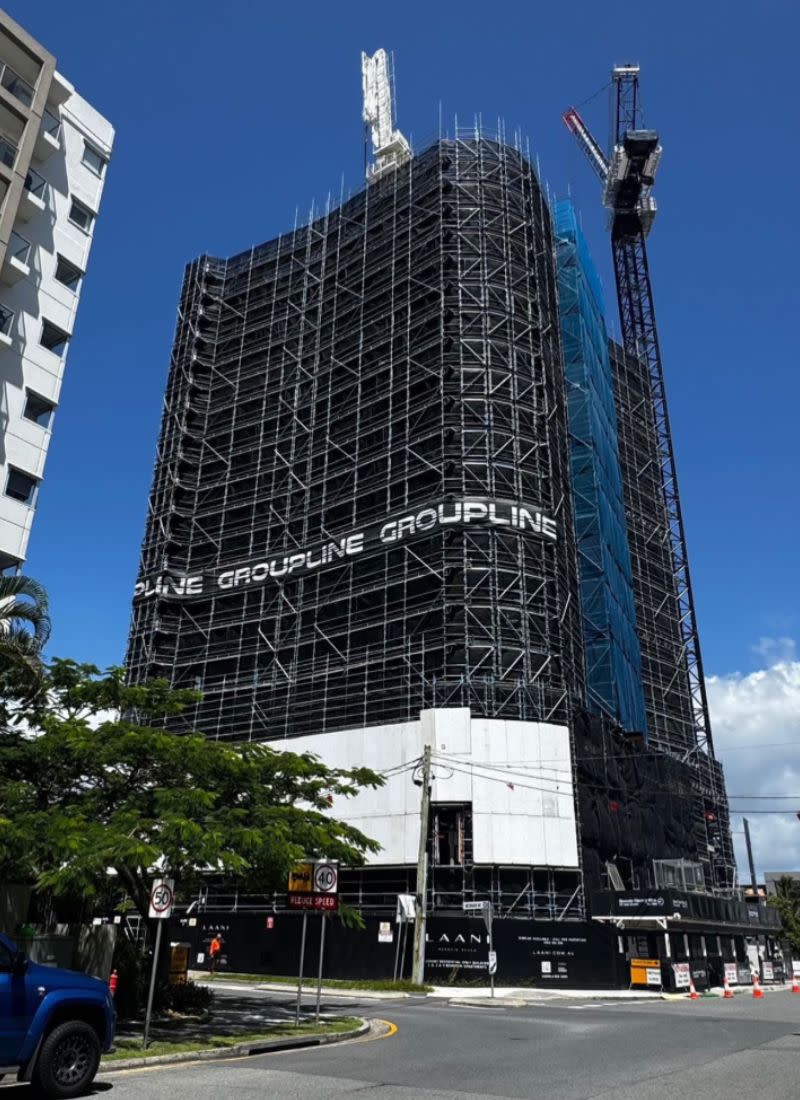
Groupline managing director David Widdicome said that like most developments, the project had had its challenges including a subcontractor insolvency.
“In addition, the project experienced a number of principal-controlled delays, including late design resolution and principal-supplied elements, which placed ongoing pressure on program and cost,” Widdicombe told The Urban Developer.
Groupline ultimately carried a significant portion of the associated costs to keep the project moving and protect delivery, he said.
“We absorbed those costs throughout the project in good faith to maintain progress and achieve completion.
“At the point the project was substantially complete and our December claim was submitted, the contract was terminated on the basis that major defects were said to prevent certification.
“The project subsequently achieved the relevant certification the following day.”
Situations like this undermined the confidence in the construction sector, he said.
“Our industry relies on strong, well-capitalised builders and when late-stage commercial disputes arise, the impact flows directly through to subcontractors and suppliers,” Widdicombe said.
“Where head contracts are heavily weighted towards developers, it can leave builders exposed at the tail end of projects, particularly once they have fully committed resources to completion.”
Subcontractor adjudication
Separately, Groupline has also been involved in a payment dispute with a subcontractor on the project.
In November last year, Groupline was ordered to pay $400,477 to subcontractor SEQ Formwork after a Queensland Building and Construction Commission (QBCC) adjudication.
SEQ Formwork initially claimed $749,673.89 via the QBCC adjudication process from Groupline for unpaid work on Laani.
Groupline said it had withheld payments due to defects, incomplete work and that the claimant did not provide additional security.
Groupline also disagreed with the amount claimed, saying that $854,637.22 should be deducted via set-off items.
These included major alleged defects, including core wall defects which required rectification, it said.
The subcontractor works also involved approximately 170 variations costing more than $414,000, Groupline said.
But QBCC adjudicator Rhiann Storey ruled that the parties had not strictly administered the contract, using drawings rather than superintendent directions to direct variations.
Groupline’s conduct led SEQ Formwork to “reasonably assume” formal written directions were not required and variations would be paid if carried out, Storey said.
Variations were accommodated within an agreed formwork cycle, meaning Saturday work and related claims should not attract additional payment, Storey said.
While Groupline was allowed to rely on some proven defect-related deductions, most major defect backcharges were rejected or heavily reduced due to lack of evidence, overreach or mischaracterisation of variations as defects.
The QBCC adjudicator ruled that Groupline owed SEQ Formwork $400,477.38.
This article was amended on February 3, 2026 to add further commentary from Groupline.

Urban Bushfire Risk Rising as Climate Changes, Cities Expand

Potential Meets Caution as NSW Pattern Book Housing Put to Test

Capital Resets as Scarcity Cycle Approaches Peak in 2026

Fears Red Tape Will Derail Melbourne Metro as Development Engine


